

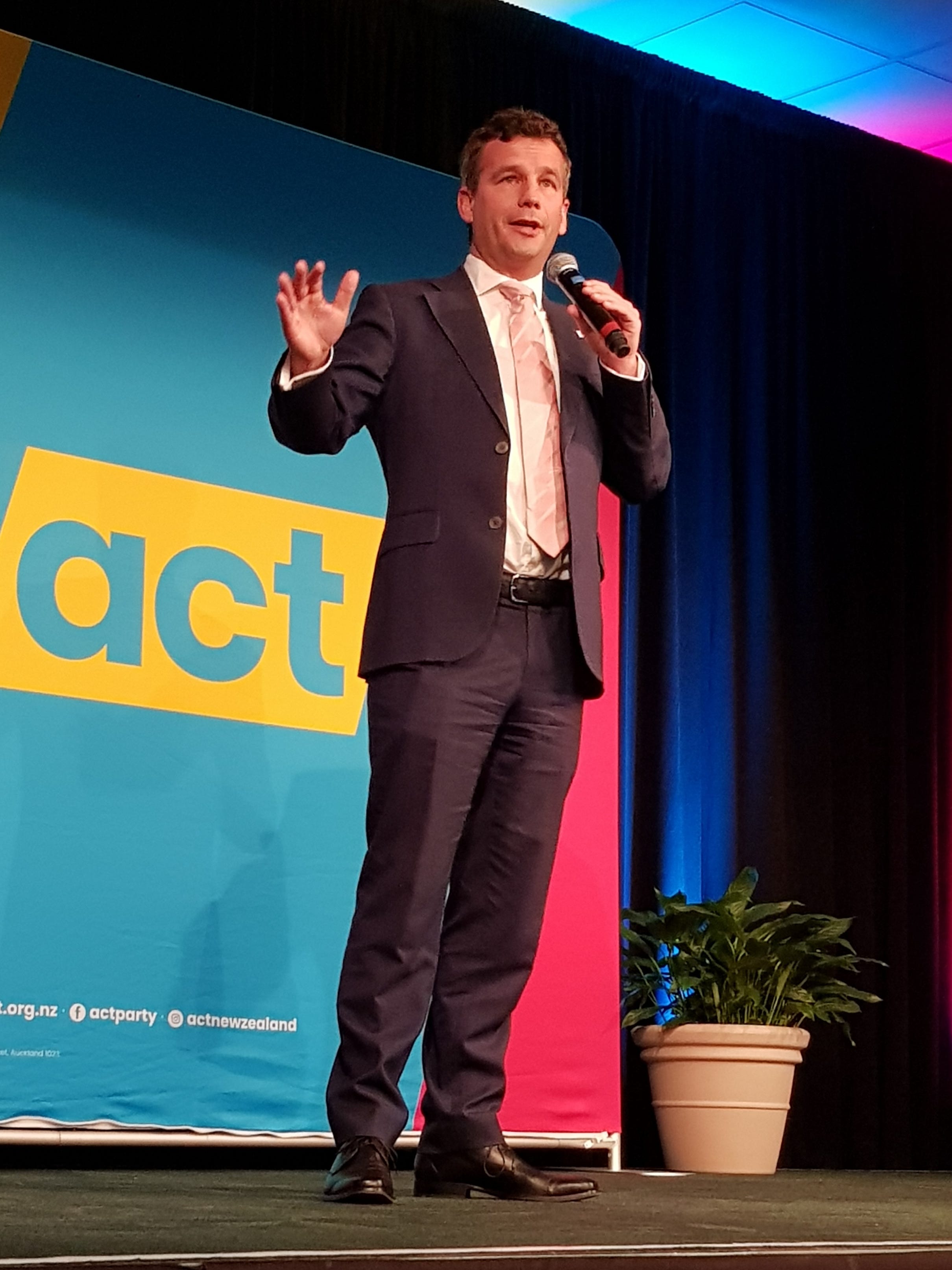

Deputy Prime Minister David Seymour recently took the unusual step of asking parliament to pass a motion noting the death of American political activist Charlie Kirk. It was “blocked” by the opposition parties, which on the surface could make them look uncaring, but there is no precedent for parliament to note the death of a foreign political figure, who didn’t hold office, and had no connection to New Zealand.
Many New Zealanders likely heard of Kirk for the first time seeing reports of his death. Outside of extremely online politics nerds, he was an unknown here. Seymour, though, has seen an opportunity to try and import US culture wars. “People who stupidly say free speech IS violence or makes them ‘unsafe’ should finally be able to see the difference”, he wrote on X. “May he rest in peace and our thoughts go out to his loved ones.”
Seymour has (back in 2022) spoken of being made unsafe by speech from Te Pati Māori MP Rawiri Waititi. Waititi had joked about poisoning Seymour with karaka berries. Seymour said in response that he was “genuinely concerned that the next step is that some slightly more radical person doesn’t think it’s a joke”, Suggesting that he does actually recognise that a link exists between speech and violence. He also called for the cancellation of an arts festival because of a poem he believed was racist against white people.
The exact motive behind the assassination of Kirk is still unclear, but given Kirk's prominence as the founder of Trump-aligned NGO Turning Point USA (TPUSA), many, including Donald Trump, were quick to blame the political left for the shooting. “We have radical left lunatics out there and we just have to beat the hell out of them", Trump told reporters.
It’s a comment illustrative of the increasingly violent political climate in the United States. When first campaigning in 2016, Trump famously offered to pay the legal fees of supporters who would “knock the crap out of” protesters. The violence associated with Trump’s ‘Make America Great Again’ campaign reached its zenith of January 6, 2021 when in an attempt to stop the peaceful transfer of power, supporters stormed the Capitol building in an insurrection connected to seven deaths.
In August of 2023, Reuters described political violence in the USA as at its worst since the 1970s. In contrast with the 1970s, it’s people rather the property being targeted, and violence was coming from the right. High profile incidents include the killing of Heather Hyer at the ‘Unite the Right’ rally in 2017, and numerous attacks on Democratic lawmakers and their spouses.
While violence from the left is not unheard of, it occurs far less often. When compared to individuals associated with a right-wing ideology, individuals adhering to a left-wing ideology had 68% lower odds of engaging in violent (vs. nonviolent) radical behavior (source).
Aotearoa New Zealand has, thankfully, not seen comparable levels of political violence. The one exception is the 2019 mosque shootings in Christchurch, where a white supremacist who believed there was a conspiracy to replace white populations with non-white Muslim ones, took the lives of 51 people. The event, unprecedented in New Zealand’s history, saw a Royal Commission investigation that made recommendations on legislative changes that could prevent further political violence. These changes were vehemently opposed by David Seymour.
When legislation was passed banning military style semi-automatic weapons and parts that could be used to make them, Seymour, at the time the only MP representing the ACT party, was the sole vote against it. Seymour and ACT have also opposed amendments to the human rights act that would give incitement of disharmony against religious groups the same status as inciting disharmony against a racial or ethnic group.
These stances won him support from the far-right, who, while not necessarily ideologically aligned with the libertarian ACT Party on all issues, believed Seymour would protect their right to incite violence against Muslims while owning assault rifles.
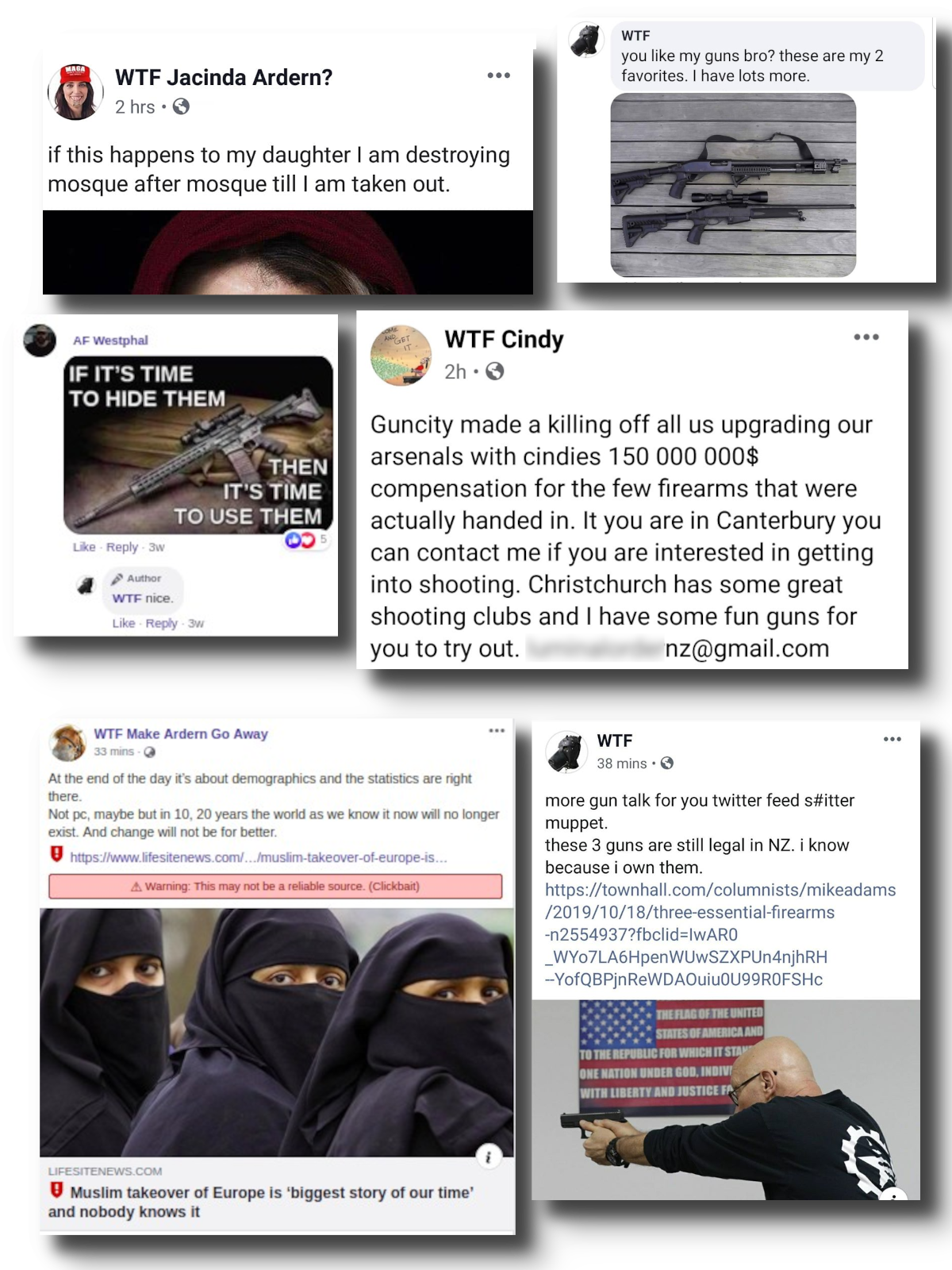
Mike Allen, a far-right extremist gun owner who had once threatened to "destroy mosque after mosque until they take me out” made a donation to the ACT party after auctioning off a Trump-campaign style “Make Ardern Go Away” hat that Seymour had signed. While the donation was a drop in the ocean compared to the support ACT receives from wealthy donors, pressure was put on Seymour (including by this author) to return the donation, as a way of distancing himself from Allen’s extremism.
Instead, Seymour dismissed Allen’s threat as “a drunken comment” and portrayed Allen as the real victim. This despite the fact that on his Facebook pages Allen regularly showed his audience that he had the means to carry out a shooting- at times lamenting that he had to hand in his most deadly weapons when changes to firearms laws were implemented.
Seymour has arguably incited violence against political opponents himself. When he called opposition MP Golriz Ghahraman a “menace to freedom” the death threats that followed were such that Ghahraman, a Kurdish New Zealander who came to the country as a refugee, was assigned extra security at parliament. When another Green MP, Benjamin Doyle, was subjected to a barrage of violent threats after a pizzagate style disinformation campaign targeted the country’s first non-binary parliamentarian, Seymour suggested that the Green Party should report the threats to the Mongrel Mob rather than police.
This referenced controversial comments from Green MP Kahurangi Carter who suggested that people in the communities she represents may feel safer around a patched gang member than a police officer. (These comments were condemned by people across the political spectrum, but should be understood in the context of a wahine Māori voicing an opinion about policing in a country that imprisons more of its indigenous women than almost anywhere else).
Academics as well as politicians were exposed to the vitriol of Seymour's followers. His "Victim of the Day" social media posts targeted intellectuals who had criticised his regulatory standards bill, saying that they suffered from ;Regulatory Standards Derangement Syndrome (a nod to ‘Trump Derangement Syndrome’ levelled against detractors of the president of the United States). Analysis of Seymour's social media carried out by researcher Sanjana Hattotuwa argued his posts had the potential to lead to online harassment, "designed to silence opposition to the controversial Regulatory Standards Bill whilst maintaining plausible deniability about the resulting harassment, harms and hate.”
This mirrors some of the activity of TPUSA, who would identify targets for harassment via a “professor watchlist” referred to by professor Stacey Patton as “nothing more than a digital hit list for academics who dare to speak truth to power.”
“I landed there in 2024 after writing commentary that inflamed the MAGA faithful. And once my name went up, the harassment machine roared to life.” she wrote in a viral Facebook post. “For weeks my inbox and voicemail were deluged. Mostly white men spat venom through the phone: ‘bitch,’ ‘c*nt,’ ‘n****r.’ They threatened all manner of violence.”
“They overwhelmed the university’s PR lines and the president’s office with calls demanding that I be fired,” she wrote. “The flood was so relentless that the head of campus security reached out to offer me an escort, because they feared one of these keyboard soldiers might step out of his basement and come do me harm.” Adding “And I am not unique,”
“Kirk’s Watchlist has terrorized legions of professors across this country. Women, Black faculty, queer scholars, basically anyone who challenged white supremacy, gun culture, or Christian nationalism suddenly found themselves targets of coordinated abuse.”
Nothing justifies Charlie Kirk’s murder. No excuses should be made. We should not, however, whitewash who this man was, or what he stood for. Kirk was not a ‘free speech activist’. Free speech activists join organisations like the American Civil Liberties Union, defending the speech of bigots on principle, but also defending the speech of controversial artists and activists on the left. Or Amnesty International, to advocate for the journalists and activists around the world imprisoned for speaking out against their governments.
Kirk instead used the principle of free speech to shield his spreading of hateful views, which extended to promoting the same ‘great replacement’ conspiracy theory that inspired the Christchurch shooter. TPUSA was classified as a hate group by the SPLC. Kirk epitomised the “debate me!” style of what, before it became the mainstream, was called the alternative right. Debate didn’t happen on a level playing field. While his views were considered "controversial" in American society, they were often aligned to the powerful. Kirk’s organisation attracted donations from wealthy backers, and he died a multi-millionaire. This puts him in a very different position than the working class people who are increasingly losing their livelihoods for their political speech- or those self-censoring out of fear.
When this period is written about as history, Kirk's murder may be seen as a turning point (forgive the pun). It was the moment when we learned political violence, which whether in the USA or Aotearoa, was routinely wielded against the marginalised, could also be turned around and directed at a white, Christian nationalist millionaire. That David Seymour chose this as the moment to speak out about political violence speaks volumes about who he is.