


In the past, I’ve written and published ‘part 2’ of these articles shortly after publishing part 1. This one I held off for several reasons. Firstly, I’m still commissioning people in Gaza to write about their stories, and last month published Hannen’s. As an aside, due to the the cost of living crisis I haven’t been asking for paid subscriptions often, but with lapsed subscriptions it’s looking likely I won’t make enough to continue doing this without also using my ‘day job’ income, which I’m happy to do so long as it’s feasible. This means if you become a paying subscriber you’ll be financing this ongoing mutual aid project to assist people in Gaza financially while providing them another platform to share their stories.
Then the death of actor Chuck Norris presented an opportunity to write about the intersection of film, internet subcultures, and the geopolitics of my formative years, so I wrote that piece first. I also wanted to wait and see the outcome of the Hungarian election. In the final chapter of Fear I had quoted (now former) Hungarian prime minister, Viktor Orbán who after winning his fourth term in power stated ‘We are sending Europe a message that this is not the past – this is the future.’ And speaking at the Conservative Political Action Conference (CPAC) in the USA 2022 had told the audience, with reference to upcoming congressional elections in the US and parliamentary elections in the European Union, he stated that ‘they will define the two fronts in the battle being fought for Western civilisation. Today, we hold neither of them. Yet we need both’.
Orbán’s regime collapsed at the April 12 election. The opposition Tisza Party won in a landslide, securing a super-majority that will allow them to overturn constitutional changes made in the Orbán era. Prime Minister elect Péter Magyar is no leftist, he is a centre-right conservative who a few years ago was in the same party or Orbán, nonetheless the victory of Tisza is significant. A €90 billion loan to Ukraine that Hungary had been blocking is now likely to go ahead. Hungary had also been vetoing EU sanctions on Israel. Benjamin Netanyahu, Vladimir Putin, and Donald Trump have lost their closest ally in Europe, and the global far-right have lost their north star.

In 2021 Hungary introduced legislation banning the “promotion” of homosexuality or gender diversity to those under 18 on “child protection” grounds. Films and television shows that featured LGBT+ characters or themes were given the same age restrictions as horror, drugs, violence and other adult themes, and in 2025 a ban on Pride marches was introduced. While Peter Maygar has been quiet on the topic of LGBT+ rights, the change in government is likely to lead to progress in this area.
Another country to keep an eye on is the UK. In Part 1 I mentioned, without naming them, the meteoric growth of the Reform Party. Founded in 2018 as the Brexit Party, they received 14.7% of the vote in the 2024 election. Since then, Reform has risen in the polls to become the most popular party in the country. Every poll for the past year, with one notable exception, has them in the lead. I’d promised in Part 1 that Part 2 would include some hope, and in the UK the hope seems to be the Green Party.
In February, the Green candidate won a by-election in the north west of England, and while a more recent by-election in the area was won by the Reform candidate, the Green Party is climbing in the polls, and support for Reform, while still historically high, is falling.
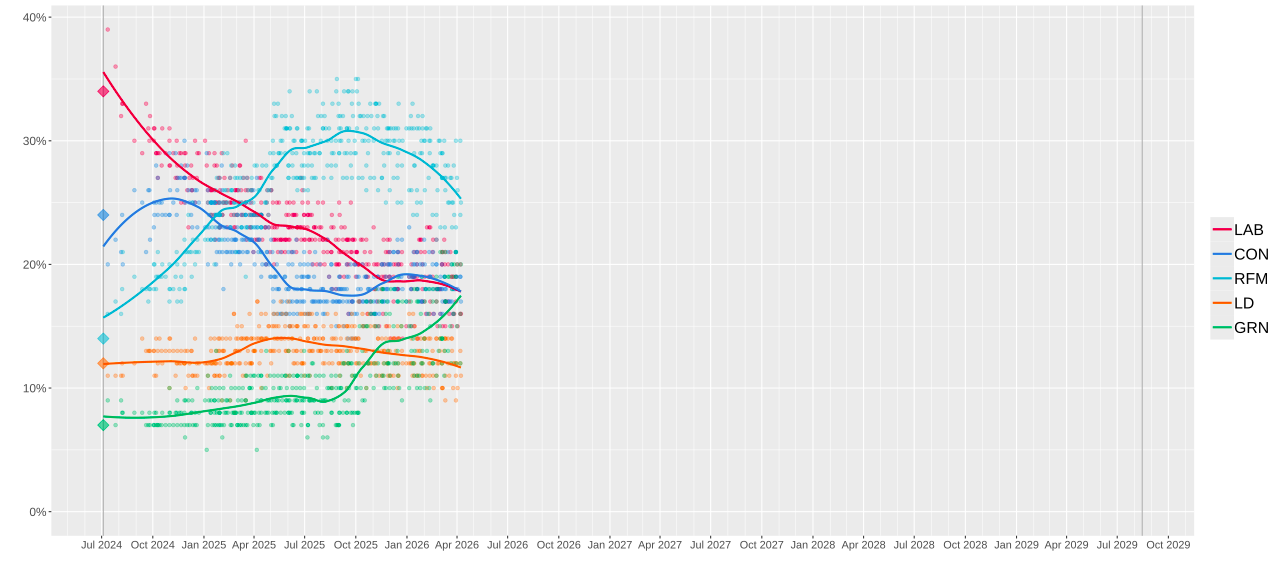
It’s a situation that would have been unthinkable just a few years ago; when the UK goes to vote in 2029 the outcome may not be a Conservative or a Labour-led government, but a Reform or Green-led one. Of course, the UK still uses First Past the Post (FPP) for elections, meaning a party can win a majority of seats in parliament with a minority of the popular vote, so the outcome is difficult to predict.
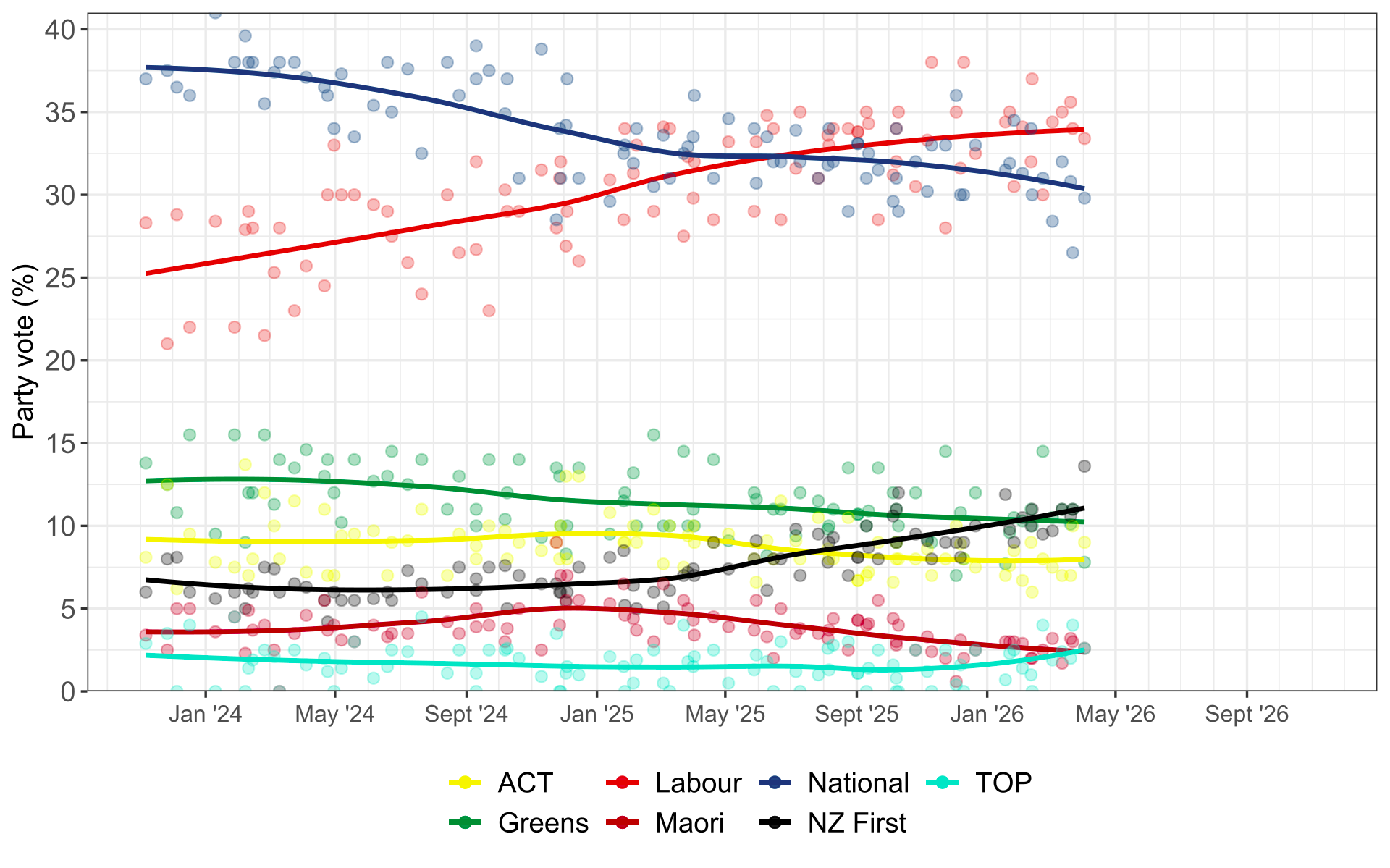
Back home in Aotearoa New Zealand, we’re seeing a worrying trend. New Zealand First got back into parliament in 2023 by courting the “freedom movement” and cannibalising the vote of other extra-parliamentary parties. They were likely the reason for the collapse in support for the New Conservatives (NZ First had adopted many of their core policies). It’s possible that some of those former New Conservative voters switched their vote to the overtly Christian Nationalist New Zeal. Now, New Zeal has deregistered with the electoral commission, and their former leader is standing for New Zealand First. The party has built a coalition of anti-vaxxers, transphobes, and Christian nationalists (admittedly, that’s an overlapping Venn diagram) and they are ‘surging’ in the polls, recently surpassing the Greens as the third most popular party. This trend mirrors not just Reform in the UK, but also One Nation in Australia.
NZ First’s latest shot in the culture wars is a bill to define men and women in law, something leader Winson Peters says will “ensure our country moves away from the woke ideology that has crept in over the last few years, undermining the protection, progression and safety of women,”. The bill was influenced largely by a petition from conservative Christian advocacy group Family First.
In Chapter 22 of Fear, I wrote “An attempt at electoral gains through imported American culture wars is not a possibility we should be ruling out” It was in reference to the New Conservatives, but I feel like we’re there now with NZ First.
Polling shows the upcoming election as too-close-to-call, with the difference between who is in government and who is in opposition being within the margin of error. The result will come down to a very small percentage of voters, a situation that could allow that coalition of anti-vaxxers, transphobes, and Christian nationalists to have influence much greater than their actual levels of support.
Hungary defeated Orbán thanks to record voter turnout. For Aotearoa New Zealand to avoid a government where politicians promoting xenophobia, transphobia, Christian nationalism, and conspiracy theories are members of the government- possibly even ministers, we need to do the same.
Voter turnout is lower than average amongst young people, Māori, Pasifika, immigrants, and New Zealanders working overseas. There are many reasons for not voting, the voter and non-voter survey conducted after the 2023 election is informative. For a quarter of non-voters, their reasons were categorised as “Voting process” such as not being enrolled, not knowing how to vote, or not getting to a polling place on time. Changes made to electoral law by the current government, such as reducing the period you’ll be able to enroll, make that process more difficult. When other countries do things like this, we call it voter suppression.
It’s nothing on the scale of what Orbán did to try and remain in power, but that doesn’t mean we can be complacent. While I’m not endorsing a particular party, I’m very much endorsing helping your friends and whanau enroll to vote, offering them rides to polling booths during the advance voting period, and helping them become informed enough about the options on offer to feel confident in voting. If enough people do that, we can avoid falling to right-wing populism.