

Last year I was invited to speak to faith leaders at the an ecumenical body formed in 2014, bringing together churches of different denominations including Anglican, Catholic, Methodist, Presbyterian, and Quakers. Below is the talk in full
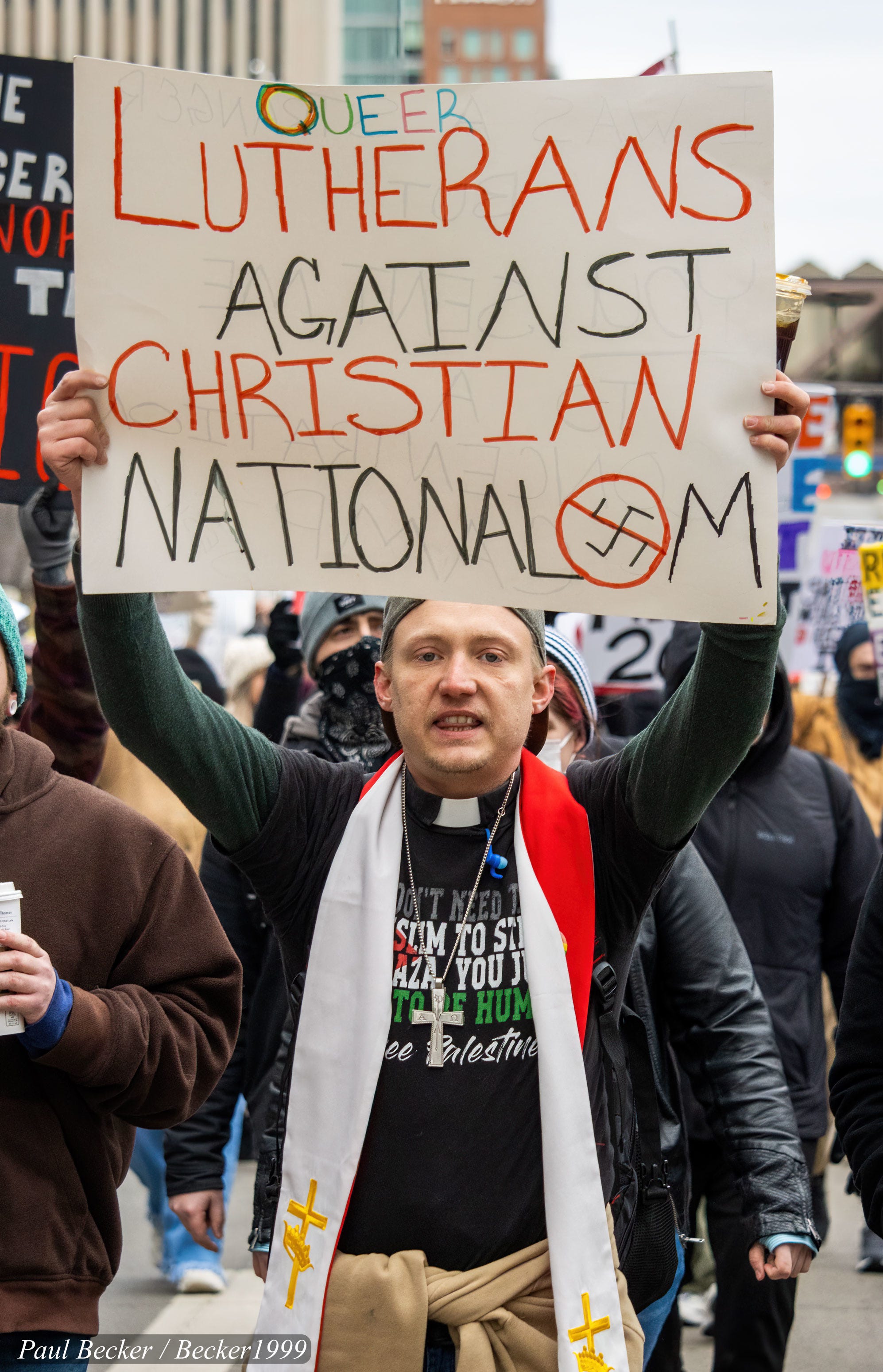
Kia ora kautau. I’m grateful to have the opportunity to speak to this gathering of faith leaders about the topic of Christian Nationalism. I’m going to begin by talking about another gathering of faith leaders that took place about a year and a half ago.
In June 2023, Pastor Peter Morlock of the City Impact Church, an evangelical congregation, held a ‘Christian Summit on the state of the nation’ to bring together the various Christian political parties, as well as a handful of current and former National Party MPs. In attendance were Brian and Hannah Tamaki, the leaders of Destiny Church and its political wing Vision New Zealand, former and current leaders of New Conservative Party, and the leaders of the overtly Christian ONE Party.
Following the summit, the ONE Party rebranded as NewZeal, with a new leader- former National Party MP (2011-2020) Alfred Ngaro. Speaking with John Cowan on Newstalk ZB following the announcement, Ngaro talked about how he believes the values of the National Party have moved away from the values he holds. He cites the ban on conversion therapy and “non-binary gender identity that came through the department of internal affairs” as examples. On ZB he described the NewZeal party as not just for Christians, but for all New Zealanders. Yet the way he speaks to audiences of evangelicals makes for a stark contrast.
“I’ll tell you this: We need to be a nation of believers that aren’t afraid” he told the crowd assembled at the Christian summit “are you willing to be broken and burnt? Because that’s the army that God is looking for.” He went on to speak about what is known as Seven Mountains Dominionism.
“You know we talk about seven mountains not as a theology, but as a strategy, but what are we doing there? How are we going to take those, right? It’s time now to preach that the space between the temple and the palace is not meant to be a divide. When Solomon was rebuilding it, he was doing it because God said, the place of governance, that Temple, is the place of worship, they’re not meant to be separated! So to the pastors and the Preachers and the theologians in our church, get your theology right!”
So what is seven mountains dominionism?
In 1975, Loren Cunningham, the founder of Youth With a Mission, and Bill Bright, the founder of Campus Crusade for Christ, proclaimed that God had given them a revelation, telling both men that there were seven “spheres,” or mountains, that were the foundations of every society: religion, family, education, government, media, arts and entertainment, and business. Whoever could take those mountains could take a nation.
“God’s plan has always been for us to have kingdom dominion and rule over every part of the world, so that His kingdom might fully inhabit the earth” writes Tommi Femrite, founding ‘apostle’ of GateKeepers International and Apostolic Intercessors Network in Invading the Seven Mountains with Intercession: How to Reclaim Society Through Prayer, published in 2012. “Yet when we look at the various areas of American society today, we must ask ourselves, Who is ruling? Sadly, it’s not us.”
She goes on to say that “the Lord has given us the “Seven Mountain Mandate” to take dominion; this is our authoritative order from God.”
For adherents of Seven Mountains Dominionism, having dominion over religion, family, education and government is only half the picture, Christians must also have dominion over business, media, arts and entertainment- areas Femrite believes are currently controlled by Jews. “American Jews—numbering a mere 1.7 percent of the US population (5.2 million out of 304 million)—have ruled the mountains of arts and entertainment, business, and media., To this day, they continue to prove one of the fundamental truths of the Seven Mountains: it only takes one person to reach a mountain’s summit and claim it as his.” She places great emphasis on the importance of culture.
“Christians have been working in Hollywood for decades trying to make a difference. I believe it has taken this long for those believers not on the Arts and Entertainment Mountain to wake up and realize the significance of this cultural sphere. Culture is not only reflected by its arts and entertainment, it is shaped by them”
This way of thinking is not dissimilar to the Breitbart doctrine – the idea that politics is ‘downstream’ from culture, and therefore you can influence politics by first changing culture. This was the strategy of Breitbart News under the leadership of Steve Bannon (later an adviser to Donald Trump), and locally is the strategy of the group Voices for Freedom and their online media network, RCR Media (initially called Reality Check Radio). Voices for Freedom began as an anti-vaccine group but have broadened to cover other conspiracy theories, they have emerged from the secular wing of the anti-government movement that grew out of the COVID-19 pandemic, and represent the beginnings of an infrastructure that can exist to influence culture and politics.
The religious wing of the anti-government movement largely emerged from Pentecostal Christians who believed the government was overstepping its authority by obstructing their right to worship (though vaccine mandates and limitations on gathering sizes). That wing already has an infrastructure in place, incorporating churches, publications, and a homeschooling curriculum. Christian Nationalism- the belief that New Zealand should be Christian nation- has the potential to become the dominant strain of the anti-government movement in the future.
To quote Ngaro again:
“Jesus Christ is now being challenged: you could no longer hide [your faith] as a nice thing to have. Everywhere you are now it’s being challenged, and what is God wanting? He’s wanting to Wake. Us. Up.” he spoke those words at the Elim Christian Centre in Porirua in March of 2023.
NewZeal has had no real success in elections, but government is only one of the seven mountains he plans to summit, and in shaping society through culture NewZeal is joined by a number of other social actors who may have differing theologies, or not theology at all, but find common ground in attitudes toward immigration, Islam, and public health measures such as vaccines.
The immediate aftermath of the Christchurch mosque shooting in 2019 saw an outpouring of interfaith solidarity. Many of you in the audience will have been part of that solidarity in some form. But you may also recall not all New Zealand’s Christian churches were enamoured with the support for the country’s Muslim community that followed the atrocity. For many of them, it was the broadcast of the adhan, the Islamic call to prayer, on RNZ that was the focal point of their anger.
Brain Tamaki, the self appointed Bishop of the evangelical Destiny Church tweeted “this is offensive to all true Christians ... our national identity is at stake”. In the aftermath of the shooting Facebook had removed a post from Tamaki that described Islam as a “fast creeping social invasion.” You may have seen that just recently, Tamaki travelled to the UK to speak at a rally organised by the British far-right activist Tommy Robinson.
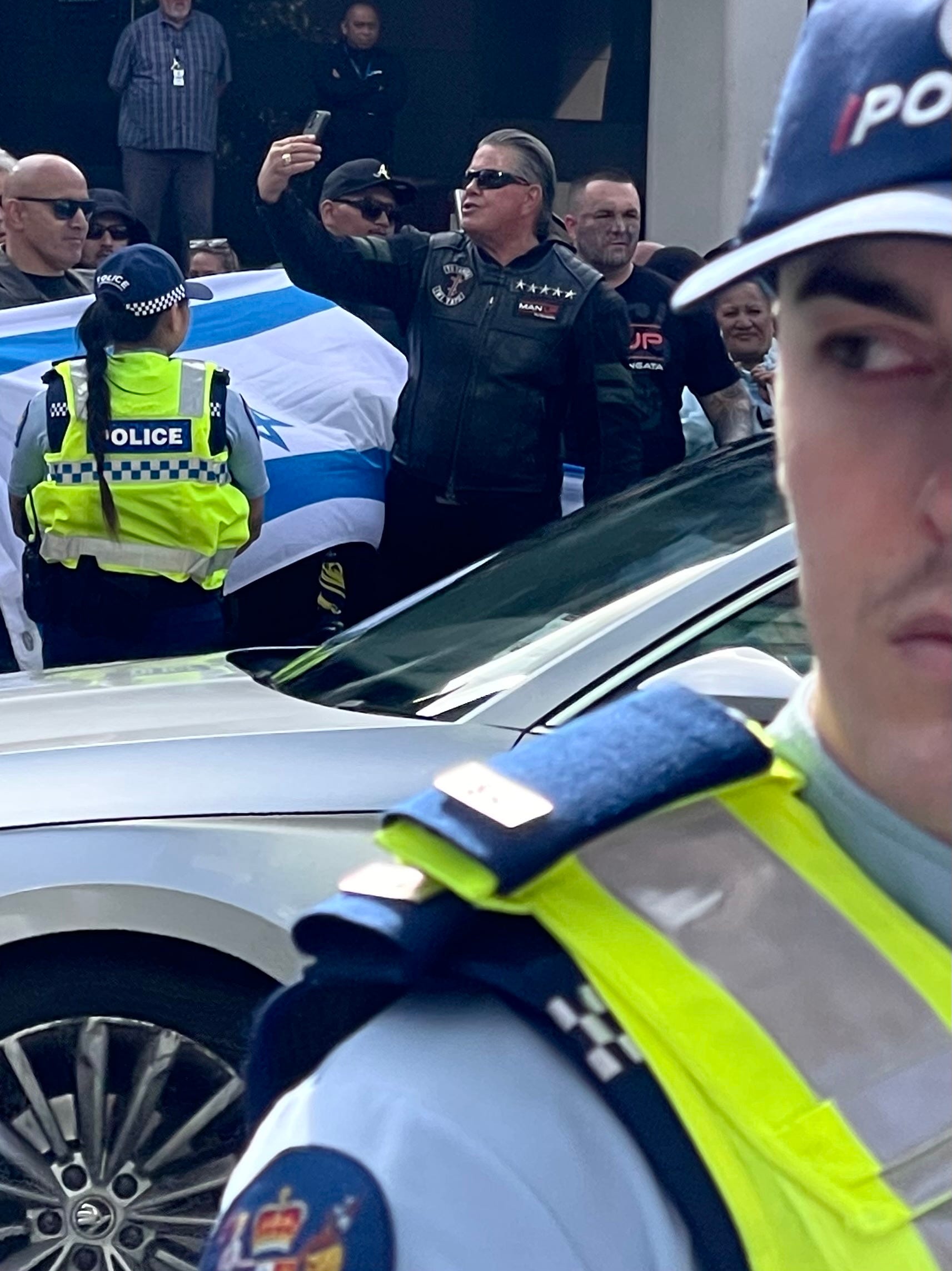
“Those who drive Christianity out of society are paving the way for Islam,” Carl Bromley, pastor of the Christchurch based Life Connection Baptist Fellowship- which is not affiliated with New Zealand’s Baptist Association- wrote on Facebook after the Adhan broadcast. Bromley’s page was full of links to articles from what Stuff described “an anti-Muslim conspiracy blog” as well as distain for increased regulation of firearms, and opposition to calls to change the name of the Canterbury rugby team from ‘The Crusaders’ to something less invocative of a Christian holy war. Bromley believed that the government was using the tragedy to promote Islam.
Ross Smith, the founder of Jesus for NZ, a group advocating the restoration of Jesus to parliamentary prayer, was furious that Islamic prayers were now being said in parliament. “She’s already said there was no Christian foundation in this nation, which is rubbish” he said in reference to then Prime Minister Jacinda Ardern.
New Zealand as a Christian country is a deeply held belief for many evangelical Christians. The book New Zealand’s Christian Heritage by Col Stringer, which was first published by his ministry in 2001, includes the words “It’s time to tell the world that this is a Christian country with a Christian heritage! This is not a Muslim country, it is not an atheistic, Buddhist, Hindu, Taoist or New Age country- New Zealand is a Christian country founded on Christian principles and governed by national laws that are founded on Biblical principles!” Among a subset of evangelicals, the nation’s Christian heritage has long been perceived to be under threat- and not just from Islam. A 2002 editorial in the evangelical publication Evidence claimed that this threat came from “[T]he academic purveyors of political correctness, the literary elite, the environmentalists, the feminists, the appeasement lobby, and the neo-Marxists, all of whom want also want to create a New Zealand in their own image”
Another evangelical magazine, Above Rubies, which is published by Colin and Nancy Campbell, who now reside in the USA but are originally from New Zealand, has promoted a view that sounds frighteningly similar to what we now call The Great Replacement theory. To quote from in an article first published in 2010:
“The result of the Christian acceptance of birth control is now measurable. Because our love of small families has consumed all of Western society, Europe and to a lesser extent America, are running out of indigenous people. And in the “nature abhors a vacuum” way of things, others are flooding in to fill the void. Most notably, Muslims who have not generally been swept up in the birth control tsunami, are handily populating every land they enter.”
Another article spoke of a “demographic winter” claiming that society- the subtext being specifically Western, Christian society, would die out. The Campbells, who on occasion tour New Zealand promoting their world view, were also part of the insurrection on January 6, 2021 where supporters of ousted president Donald Trump stormed the capitol building in Washington DC. Following that event Nancy Campbell wrote on Facebook that the violence “was staged with Antifa to make it look bad for President Trump.”
In the lead up to the 2020 election, Hannah Tamaki, who served as leader of Vision New Zealand, called for a 97% cut to immigration numbers, and suggested that rather than accepting refugees for resettlement New Zealand should pay them not to come here. She vowed to ban the construction of new “mosques, temples and other foreign buildings of worship”. Her husband Brain made a Facebook post that was sponsored to increase its reach, stating “we can not accept the proliferation of Islam in our country”. ONE, the party that would later become NewZeal, also advocated slashing the annual refugee intake; from 1500 to just 350.
ONE also had a policy that New Zealand establish an embassy in Jerusalem and apologise to Israel for New Zealand’s sponsoring of UN Resolution 2334, which states that Israel’s settlement activity in the occupied territories constitutes a “flagrant violation” of international law. These views were shared by the New Conservative Party, who list New Zealand - Israel relations as one of their eight policy pillars. Presumably in both cases the policy, and the priority given to it, results from the influence of Christian Zionism, a belief held by some Christians that the existence of the state of Israel is the fulfilment of part of Biblical prophecy, heralding the second coming of Christ.
This ideology began with 17th century puritans in England who believed that for prophecy to be fulfilled Jewish people needed to return to historical Israel.
Israeli historian Anita Shapira has suggested that in the nineteenth century this idea was spread from evangelical protestants to Jewish circles, so what we now call Christian Zionism may have actually influenced Jewish Zionism. More recent polling and academic research however suggests widespread distrust among Jews towards the motives of Evangelical Protestants.
The Christian Zionist movement grew its influence in the USA in the later part of the 20th century, promoted by Evangelical leaders such as Jerry Falwell and Pat Robertson who became prominent during the rise of the Christian right in the US in the 1980s and 1990s. In his 1981 book The Fundamentalist Phenomenon Falwell stated “To stand against Israel is to stand against God. We believe that history and scripture prove that God deals with nations in relation to how they deal with Israel.”
In Aotearoa, evangelical Christianity doesn’t play the outsize role in politics it does in the US, but we have seen in the two years since the Hamas terror attack on October 7 2023 and Israel’s genocidal response, Destiny Church emerge as possibly the largest faction of Israel supporters in this country. There are more Israel-supporting evangelical Christians than there are Jewish people in Aotearoa, and of course a significant proportion of the Jewish population, represented by groups like Dayenu and Alternative Jewish Voices, are opposed to the occupation of Palestine.
At a protest he held outside parliament in December 2023, Brian Tamaki described himself as a “spiritual Jew” and Destiny Church Pastor Nigel Woodley, speaking at the same rally stated that “Israel’s right to defend itself includes the right to wage war until there is an unconditional surrender.” This was not Tamaki’s first protest in support of Israel, following previous protests he had appeared on Israeli television, now describing himself as “a bit of a star over there”.
There is also the lobby group ‘The Israel Institute’ which is a private company with three directors, only one of whom is Jewish, while the other two are Christian Zionists. Marilyn Garson, author of the recently released book Jewish, not Zionist. Has written that “The IINZ is not a Jewish institution although it does reflect Israel’s increasing Christian Zionist support.” The IINZ is occasionally used as a source by the media to give “balance” to coverage of the Israel-Palestine conflict and New Zealand’s response, without it being made clear that this is a predominantly evangelical Christian organisation. We see here an example of this sector of society having an outsize influence on the wider public conversation.
As I touched on earlier, we also saw evangelical Christians playing a large role in the opposition to public health measures during the COVID-19 pandemic. City Impact Pastor Peter Mortlock promoted an anti-lockdown protest organised by Destiny Church front group The Freedom and Rights Coalition during a sermon, telling his congregation that it was their choice whether to attend or not, but concluding “I think sooner or later we are going to have to make a stand – a stand for our rights, the way our freedoms are being stripped away.” In another sermon he parroted a number of talking points from the conspiratorial anti-vaccine movement. “I don’t believe in the government right now, I don’t believe the media right now, and I’m sorry but I don’t trust Big Pharma either! Why is that? Well, if I mention the name Bill Gates or George Soros or Anthony Fauci – and it’s not about conspiracy, it’s just about plain facts, right?!”
Globally, Pentacoastal Christians, who number around half a billion, were active in opposing restrictions on gatherings in response to the COVID-19 pandemic, making it clear that they wouldn’t be closing their church doors for anything short of the second coming. Fraser MacDiononald, an anthropologist at the University of Waikato, sees the Pentecostal response to the pandemic as rooted in theology. Pentecostals more than any other denomination concern themselves with otherworldly power. The COVID-19 virus was demonised in a very literal sense of the word, but the protection against this evil is the power of the Holy Spirit, and any earthly rules that impeded a devout Pentecostal from having a life in the Spirit were considered suspect, and a government imposing lockdowns and vaccine mandates, was on the side of the devil.
The Pentecostal interpretation of the government as an entity carrying out an evil agenda, conspiring to suppress Christianity and open the doors for Islam, was an idea that dovetailed with the far right conspiracy theorists who had come to a similar conclusion by different means.
Dieuwe de Boer, previously the general secretary of the New Conservative Party and founder of the website Right Minds penned an article titled “Resistance to Tyranny”. With reference to the sixteenth century Presbyterian theologian John Knox, he claims that all authority is subservient to God, and tyranny is when an earthly authority rebels against God’s supreme authority, something he saw New Zealand’s government as doing. He claimed that the Director General of Health Ashley Bloomfield was presiding “over a technocratic machine with nigh unlimited power, which he wields directly against the Church” and that two scientists who had become prominently featured in the media during the pandemic, Shawn Hendy and Siouxsie Wiles, were both “involved in overt anti-Christian activism through deconstructing God’s creation of sexual dimorphism and support the demonic system known as “transgenderism.”
For de Boer, the fact that Churches were not considered essential during the COVID-19 lockdowns was an affront to God, as were any limits on gathering numbers or the requirement to have vaccine pass to attend a church service “If you have to show ID at the door, you are not entering a church of Jesus Christ. If people will be turned away from worship due to an arbitrary number being met, you are not entering a church of Jesus Christ.”
When police spoke to pastor Carl Bromley regarding his hosting of a church service in his home during a level 4 lockdown, he told the officer that he would not “bow down to any legislation that deprives me of my God-given right to worship”. In footage he posted to social media, Bromley referred to the police as totalitarian foot soldiers and claimed that they and members of the New Zealand public, who “endorse and tolerate this tyranny” should be ashamed. “I will die on this hill if need be, by the grace and provision of God,” For these evangelicals, noncompliance with the COVID-19 Public Health Response Act wasn’t just a political protest, but a stand against a government who were defying God and taking the side of evil.
Today Diewue de Boer hosts a show on Reality Check Radio, where he and his co-host regularly promote anti-immigration and anti-Islam talking points, as well as the Great Replacement conspiracy theory, which is spoken about as fact.
Concurrently with this rise in a particularly protestant form of Christian Nationalism, recent years have also seen a growth in a form of traditionalist Catholicism linked to the political right, with high profile converts such as the Dutch far-right activist Eva Vlaardingerbroek and US vice president J.D Vance.
Christopher Lamb, the author of The Outsider: Pope Francis and His Battle to Reform the Church told an interviewer that “The populists and nationalists were looking for some kind of soul for their politics and they found it in some symbols of the faith,” David W. Lafferty, who writes about conspiracy theories for the Catholic website Where is Peter, described this as “Catholic LARPing,” (LARPing referring to live action role-playing) adopting the trappings of Catholicism but not the actual tenets of the faith.
In my research on New Zealand far-right, I am aware of two young men who had been part of a white supremacist organisation who gravitated to Catholicism. One of them had traveled to Ireland to be under the tutelage of Father Richard Williamson.
Williamson, who died earlier this year [2025], had been ordained as a priest by the French archbishop Marcel-François Lefebvre. Lefebvre had supported the pro-Nazi Vichy regime. He described France’s liberation from the Nazis as “the victory of Freemasonry against the Catholic order of Petain”. In 1970 he founded The Society of Saint Pius X and in 1974 he publicly denounced the Vatican II reforms that modernised the Church as heretical. When in 1988 Lefebvre defied the Vatican by consecrating four bishops, Pope John Paul II excommunicated him and all SSPX priests, and declared SSPX in formal schism with the church.
In 1989, Richard Williamson, at that time the rector of the SSPX’s main North American seminary in Wisconsin, spoke at a Canadian event where he decried the alleged persecution of Holocaust denier and neo-Nazi Ernst Zundel by the Canadian government, telling his audience “There was not one Jew killed in the gas chambers. It was all lies, lies, lies”. This resulted in the Canadian government banning all SSPX publications.
In 2009 Pope Benedict XVI reversed the 1988 excommunications of SSPX priests, including Williamson, in an attempt at reconciliation with the order. Three days earlier in an interview with Swedish journalist Ali Fegan, Williamson had repeated his claim that no Jews were killed in Nazi gas chambers. The Vatican claimed to be unaware of Williamson’s comments when the excommunication was reversed, but he was soon excommunicated again, following his conviction in a German court for Holocaust denial, making him a rare case of a priest excommunicated twice by two different Popes.
In 2012 Williamson was expelled from SSPX, allegedly for failing to show respect and obedience. He went on to found the breakaway SSPX Resistance. In 2020 he delivered a sermon where he blamed Jewish people for the COVID-19 pandemic and claimed they were manipulating the stock market in an effort to start a war, describing them as “master servants of the devil”.
The New Zealand man who was following Williamson took the name John Capistrano. Capistrano was a saint who led a crusade against Ottoman Turks at the Battle of Belgrade in 1456. Notable, as many on the far-right who adopt Catholicism do so at least in part because of a belief in a clash of civilisations between the Christian West and the Islamic East. Capistrano is also notable for sermons that motivated pogroms against European Jews.
The other New Zealander I’m aware of is the soldier recently sentenced for attempted espionage. He had been a founding member of the white supremacist group The Dominion Movement and later Action Zealandia. While his name is suppressed, researchers such as myself are aware of his identity, and a newsletter from the Cathedral of the Holy Spirit parish in Palmerston North lists him as receiving the sacrament of confirmation (the last stage of a conversion) a few months before he was arrested at Linton Military Camp.
I was previously a research associate of He Whenua Taurikura, the now disbanded centre for research excellence established after the royal commission inquiry into the 2019 Mosque shootings. At one of the organisation’s conferences, I spoke with an Iman who told me about how there are plans in place for de-radicalisation if someone who has been radicalised online starts attending a mosque. For radical Islamists, their extremism is negatively correlated with Mosque attendance, with radicalisation largely happening online.
We are beginning to see a phenomenon of radicalised Christians. I’ve spoken today largely about New Zealand but of course we live in a very globalised world when it comes to mass communication, and people are being influenced by ideas coming from Europe and North America. I ask you to consider, is there a de-radicialisation plan in place if someone joins your congregation expressing the idea that New Zealand is a Christian nation, and that justifies a hostility toward refugees and migrants of other faiths, or the LGBT community, or a view that the genocide in Gaza is not only justified but theologically necessary. Indeed, not just new arrivals but existing members of your congregations exposed to these ideas online may start expressing them.