

Beginning on March 19, the Feast of Saint Joseph, parishioners of churches affiliated with the Society of Saint Pius the 10th (SSPXX) began the Rosary Crusade for the Episcopal Consecrations, organised by the Legion of Mary Australia and New Zealand, to pray for the consecrations of new SSPX bishops. The consecrations were to take place on July 1, the feast of the precious blood, a feast day that the majority of Catholics stopped observing in 1969. “Please email ASAP the total number of 5-Decade Rosaries you said during the Crusade” the parish newsletter of Saint Anthony’s in Whanganui reminded readers, after promoting the upcoming fundraising jogathon and a farewell lunch for a departing priest (“Please bring a plate to share.”) Behind these provincial niceties however, the SSPX was gearing up to commit what Pope Leo XIV called “a sin of extreme gravity”. I’ll get to that, but first a little history:
The SSPX was founded by Marcel-François Lefebvre, a French Arch-Bishop who had supported the pro-Nazi Vichy regime during the second world war and described France’s liberation from the Nazis as ‘the victory of Freemasonry against the Catholic order of Pétain’. He remained a supporter of far-right parties until his death in 1991, advocating for the French to vote for the Front Nationale, describing Jean-Marie Le Pen’s ideal as “a government that applies real Catholic principles, like Franco and Salazar did.” (Referring to the fascist leaders of Spain and Portugal).
He is perhaps best known though for his opposition to the Vatican II reforms that modernised the Church in the early 1960s. In 1974, he publicly denounced the reforms as heretical. The Vatican suspended his right to perform priestly functions after he refused orders from Pope Paul VI to shut down his seminary in Écône, Switzerland. Then in 1988, when Lefebvre defied the Vatican again by consecrating new bishops, Pope John Paul II excommunicated him and all SSPX priests, declaring the society in formal schism with the church.
In 2008, a splinter from the SSPX, the Sons of the Most Holy Redeemer (FSSR, from the Latin Filii Sanctissimi Redemptoris) reconciled with the Vatican. FSSR has a priory in Christchurch, and a monastery on the island of Papa Stronsay in Scotland (where a 24 year old monk from New Zealand went missing earlier this year.) The Christchurch based priests meanwhile, were stripped of priestly authority by the local bishop in 2024 for performing unauthorised exorcisms. In May this year, the FSSR decided to go full sedevacantist- another Latin term translating to “the seat is vacant” the seat in this case referring to the Holy See. Catholics see the Pope as infallible, but if you’re offside with the Pope, you can resort to the nuclear option and declare the Pope illegitimate. “We are living in the most catastrophic period the Church has ever endured” claimed the FSSR, seemingly minimising historical events like the reformation and the thirty years war. But back to the SSPX:
Pope Benedict XVI reversed the 1988 excommunications of SSPX priests in 2009, in an attempt at a reconciliation with the order. One of those priests, Richard Williamson, was soon excommunicated again following his conviction for Holocaust denial in a German court. Williamson, who had been consecrated by Lefebvre, later led his own split from the SSPX- the SSPX Resistance- basing himself near Cork in Ireland where he gave sermons blaming Jewish people for the COVID-19 pandemic and encouraged followers to read The Protocols of the Elders of Zion. Interestingly (horrifyingly), two New Zealanders had travelled to Ireland to be part of Williamson’s group. He died last year.
Dying bishops have been a problem for the SSPX, when you can’t consecrate new ones, after nearly four decades you start to run out. When on July 1 a new crop of SSPX bishops were consecrated in Ecône (Lefebvre’s seminary never did close down) the excommunication was instant, not just of Bishops and priests but also of lay people who “formally adhere” to the group, leading to Catholics who had attended the occasional Latin mass now asking “Am I in schism?”, “Am I excommunicated?”. The short answer is, no, and in fact, Bishops have been inviting attendees of SSPX services to now join with more mainstream parishes.
In our modern, secular society, this whole saga could be little more than an intellectual curiosity, but Catholicism has emerged as a battle ground in the culture wars. “The populists and nationalists were looking for some kind of soul for their politics,’ Christopher Lamb, the author of The Outsider: Pope Francis and His Battle to Reform the Church, told Vanity Fair back in 2020, regarding the rise of a MAGA affiliated Catholic right. Now the US has a vice president from that milieu, a politically hard right convert to the faith who, should he succeed Trump in the presidency, will be the nation’s third Catholic president, but in a rather different mold than the first two (Irish-American Democrats John F Kennedy and Joseph Biden).
In New Zealand, one of the world’s most secular countries, Catholicism is experiencing a “quiet revival” in Christchurch, attracting young men who might otherwise (or simultaneously) be sucked into the world of manosphere influencers. University of Canterbury sociologist Michael Grimshaw, who has been tracking Gen Z’s return to religion globally and locally, sees this revival as part of a wider swing back towards a masculine-focused society and traditional gender roles, a reactionary turn that also includes tradwives.
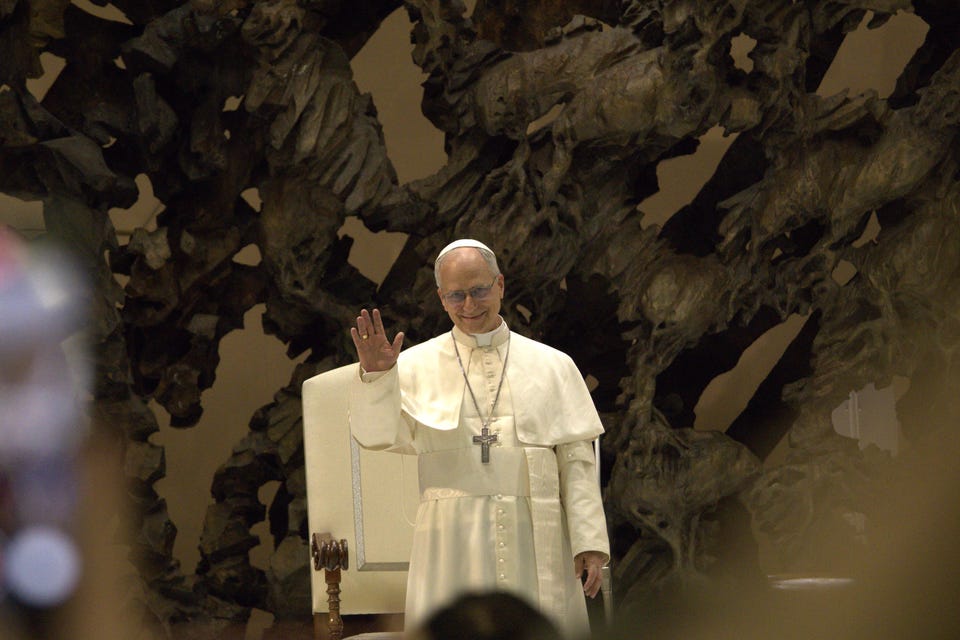
The Catholic Church, in its ‘moderate’ mainstream, arguably still has a lot of progress to make on issues of gender, sexuality, and reproductive rights (The German Synodal Way gives a glimpse of what future progress might look like) but in Pope Leo XIV we have examples of practicing the faith that’s counter to that “traditional” Catholicism of J.D. Vance and the schismatic sects with their historical ties to fascism. Leo has called Trump’s immigration crackdown “inhumane” and, significantly, the first US-American Pope chose to spend the day of the United States 250th celebration not in his home country but on the Italian island of Lampedusa, a gateway for migrants crossing the Mediterranean into Europe.
A certain type of person will always gravitate toward groups like the SSPX and FSSR, but with those sects now more marginal than before, people looking for a spiritual home in the Church may be more likely to end up on a more Christ-like path, perhaps moved to action not by a “rosary crusade” for the would-be bishops of an order started by a Nazi collaborator, but instead by the images of rosary beads confiscated from undocumented migrants crossing the US border.